

If you are watching the world right now and feeling the weight of it — this is written for you.
Across the globe, people are standing up for what they believe in. Protesters, dissenters, advocates for justice and freedom. The impulse behind that movement is often beautiful — a genuine love for human dignity, a refusal to look away from suffering.
But something worth examining is happening beneath the surface. In fighting what we oppose, many have begun to absorb its energy. The anger, the contempt, the dehumanizing of those on the other side — these are the very qualities we rose up to resist. When we carry them into our protests and our posts and our conversations, we don’t weaken what we oppose. We extend it.
We become, without intending to, a mirror of what we hate.
Maha Ghosananda, the Cambodian Buddhist monk known as the Gandhi of Cambodia, walked directly into refugee camps filled with people who had lost everything — their families, their homes, their country — to genocide. He could have spoken of justice. He could have spoken of righteous anger. Instead he repeated a verse from the ancient Dhammapada until thousands of broken voices joined him:
Hatred never ceases by hatred. By love alone is healed. This is an ancient and eternal law.
He also wrote: Retaliation, hatred and revenge only continue the cycle and never stop it. Reconciliation does not mean that we surrender rights and conditions, but rather that we use love in all of our negotiations.
This is not weakness. This is the most demanding form of courage there is.
We have seen it demonstrated before. Gandhi faced an empire. Mandela spent 27 years in prison and walked out with more compassion than when he entered — not because imprisonment was acceptable, but because he refused to let it determine who he would be. Mother Teresa moved through poverty and suffering daily and met each person as worthy of dignity. The young people of the 1960s sat at lunch counters in silence while hatred was poured over them, and they did not retaliate — and in doing so they changed a generation.
These were not passive people. They were fierce. But their fierceness was rooted in love rather than contempt, and that distinction changed everything.
Research into mindfulness practice offers something worth considering here. When we are met with injustice, the instinct is to take it personally — to make it about us, our side, our survival. That is a very human response. But studies suggest that a sustained mindfulness practice gradually shifts something in us — from a self-focused view toward a wider one, a recognition that our wellbeing is not separate from the wellbeing of others. Even those we oppose.
That wider view doesn’t make injustice acceptable. It makes our response to it more skillful.
Martin Luther King Jr, who studied Gandhi carefully, said it plainly: Hate cannot drive out hate. Only love can do that.
Jesus said: Let your light shine.
Not your argument. Not your outrage. Your light.
It is far easier to spread darkness than to tend a flame. It costs nothing to amplify what is wrong, to add our voice to the chorus of despair. What requires genuine courage is to remain committed to equity, freedom and justice while demonstrating that commitment in the quality of our presence — in how we speak, how we listen, how we treat even those we fundamentally disagree with.
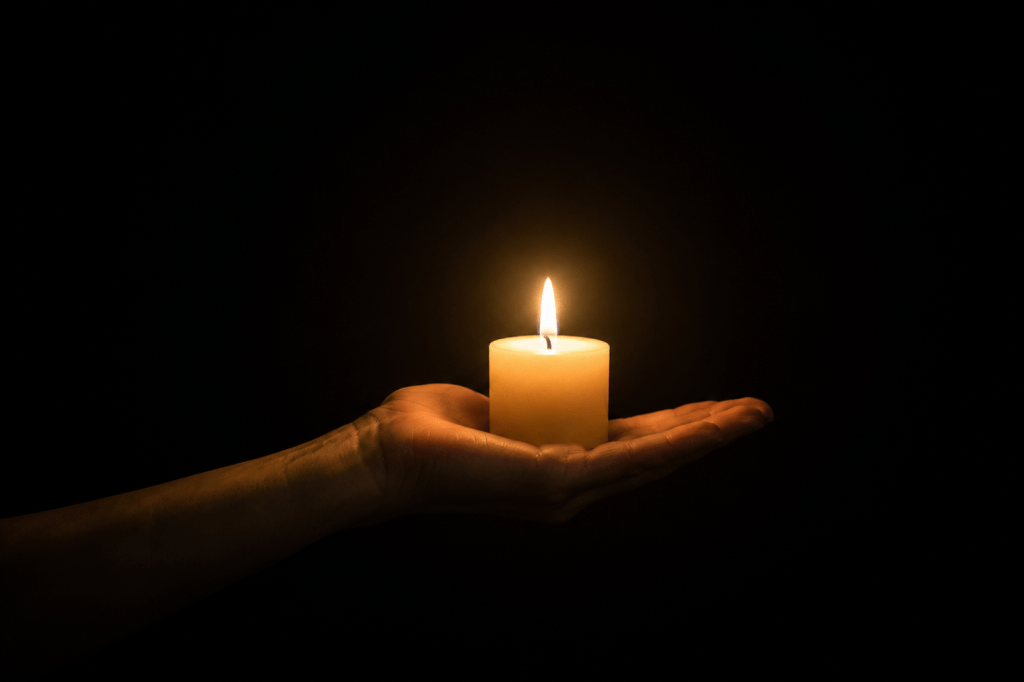
We want to change hearts, not just policies. Hearts are not changed by force. They are changed by encounter with something that feels different from what they expected.
Be that difference.
A Closing Practice: Loving Kindness for Yourself and Those You Oppose
Find a comfortable position. Close your eyes or soften your gaze.
Begin with yourself. Place one hand gently over your heart.
Breathe in slowly through the nose. Breathe out through the mouth.
Silently offer yourself these words:
May I be safe. May I be at peace. May I meet this moment with an open heart.
Breathe. Rest there.
Now bring to mind someone you are in conflict with — not to forgive what cannot yet be forgiven, but simply to recognize their humanity. They too carry fear. They too carry longing. They too want to be safe.
Breathe in. Breathe out.
May you be free from suffering. May something in you open toward the light.
You don’t have to mean it completely yet. Begin where you are. That is enough.
Return to your own heart.
May we find, together, what none of us can find alone.
Jan
—
Jan Wood is an author, mindfulness guide, and lover of life, based in Baker City, Oregon. Through Prem Valley Mindfulness, she offers personalized mindfulness coaching grounded in practical, everyday practice. If you are curious about working together or exploring the daily practices offered on the site, she would be glad to hear from you at premvalleymindfulness.com.


Leave a Reply