
When I was young, a friend invited me to meditate with her. It was something her family practiced regularly, and she made it sound as natural as brushing your teeth.
Curious, I mentioned it to my church youth pastor and was quickly warned that I was “opening myself up to the enemy.” At the time, that was a common view among many Christian communities, that silence and stillness might somehow invite spiritual danger.
But what I actually found was the opposite.
Sitting quietly with my own breath, my own thoughts, and my own heart offered me a peace that truly did pass all understanding. There was no darkness, no danger, only the dawning realization that being still wasn’t about emptying myself of spirit, but about meeting life exactly as it was.
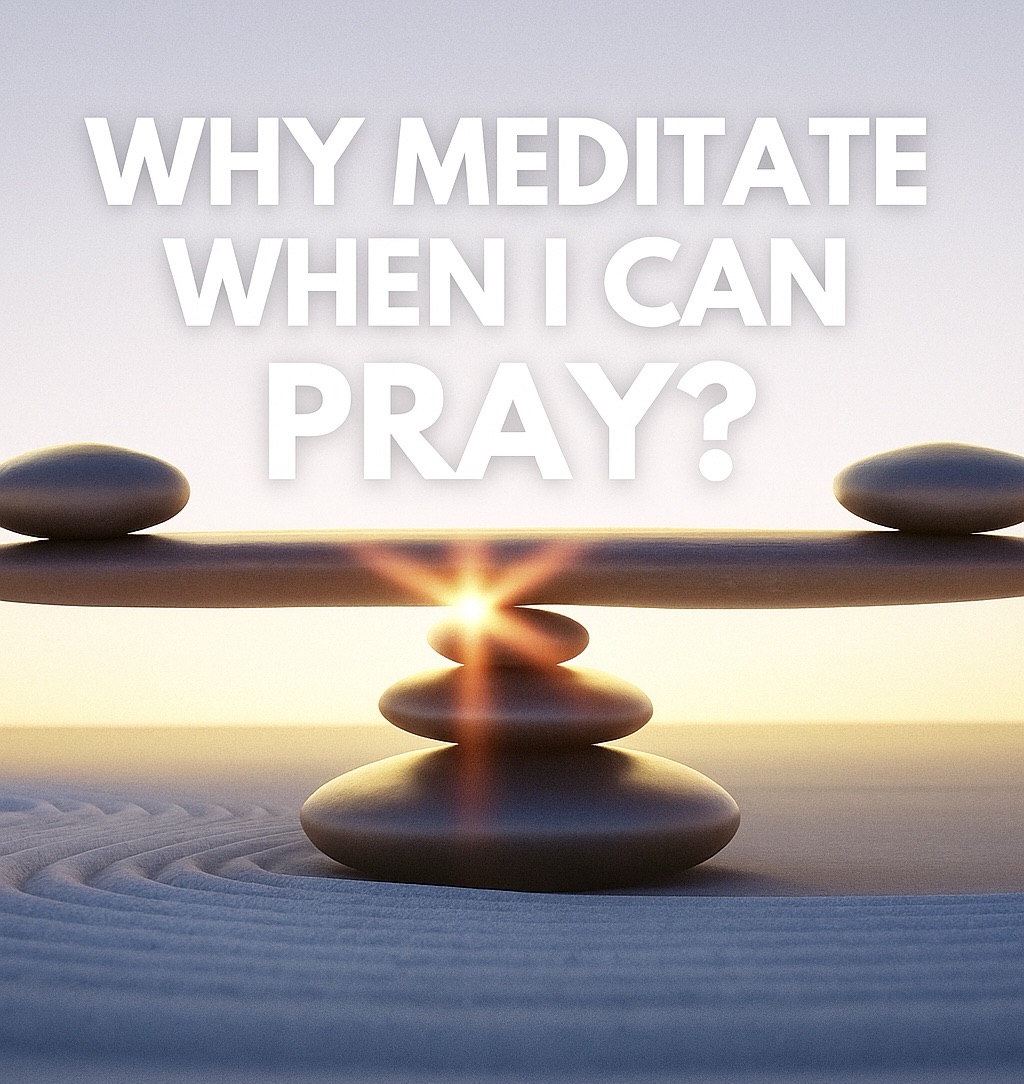
Why Meditate When I Can Pray?
That’s a question I asked myself in the beginning too.
For many of us raised within Christian or faith-based traditions, prayer already feels like a full spiritual practice. So why add meditation?
The difference, I’ve found, is subtle but beautiful.
Prayer is a conversation, an active reaching outward. It’s how we speak, listen, and commune with something (or someone) greater than ourselves.
Meditation, on the other hand, is a listening inward. It’s not about asking or thanking or pleading. It’s about noticing. It’s about learning to sit in the same room as your own thoughts without needing to rearrange the furniture.
If prayer is how we speak from the heart, meditation is how we learn to pause and truly listen to ourselves, to life, to the moment unfolding.
Why Meditation Matters More Than Ever
Our bodies tell the story of our days long before our words do.
We hardly notice how our jaws clench during difficult conversations.
How our shoulders creep upward while driving in traffic.
How our stomachs tighten when an email arrives marked “urgent.”
These are the quiet signatures of stress, small, familiar contractions that whisper, I’m not at ease.
Meditation helps us begin to notice. It’s a pause button for the body, a chance to see what’s really happening beneath the surface. In those few minutes of sitting still, we can listen, learn, and begin to understand when and how our tension shows up. Over time, this awareness becomes a kind of early warning system.
The next time you feel that familiar stomach churn or shoulder knot, you remember: Oh, I know this. I’ve practiced being with this. And instead of reacting, you breathe. You soften. You return to peace.
A Simple Practice
If you’re new to meditation, start small.
After brushing your teeth in the morning, say to yourself, Now I sit.
Find a comfortable chair, comfortable enough to relax but not so cozy that you’ll fall asleep. Let your eyes rest softly toward the floor.
Then, for ten minutes:
- Allow the ears to hear what they will. Don’t name the sounds or judge them.
- Allow the body to feel its sensations, warmth, tension, tingling, without fixing anything.
- Allow the mind to think. Thoughts will come and go; let them drift through without chasing them or trying to make them go away.
That’s all. Ten minutes of allowing. No goals. No perfection. Just presence.
What Begins to Change
A simple routine like this resets more than your morning, it rewires how you meet life. Your heart rate lowers. Your breath deepens. The small muscles in your neck, shoulders, and jaw begin to release.
And perhaps most surprisingly, you begin to carry that stillness with you.
You’ll notice it in the grocery store line, in traffic, or during a tough conversation.
The peace you practiced at sunrise becomes the peace you can recall anytime, because it was never outside of you to begin with.
An Invitation
If you’ve never experienced the calm found through a meditation practice and you’d like to learn more, visit my site at PremValleyMindfulness.com and send me a note. I’d love to hear from you.
Jan


Leave a Reply