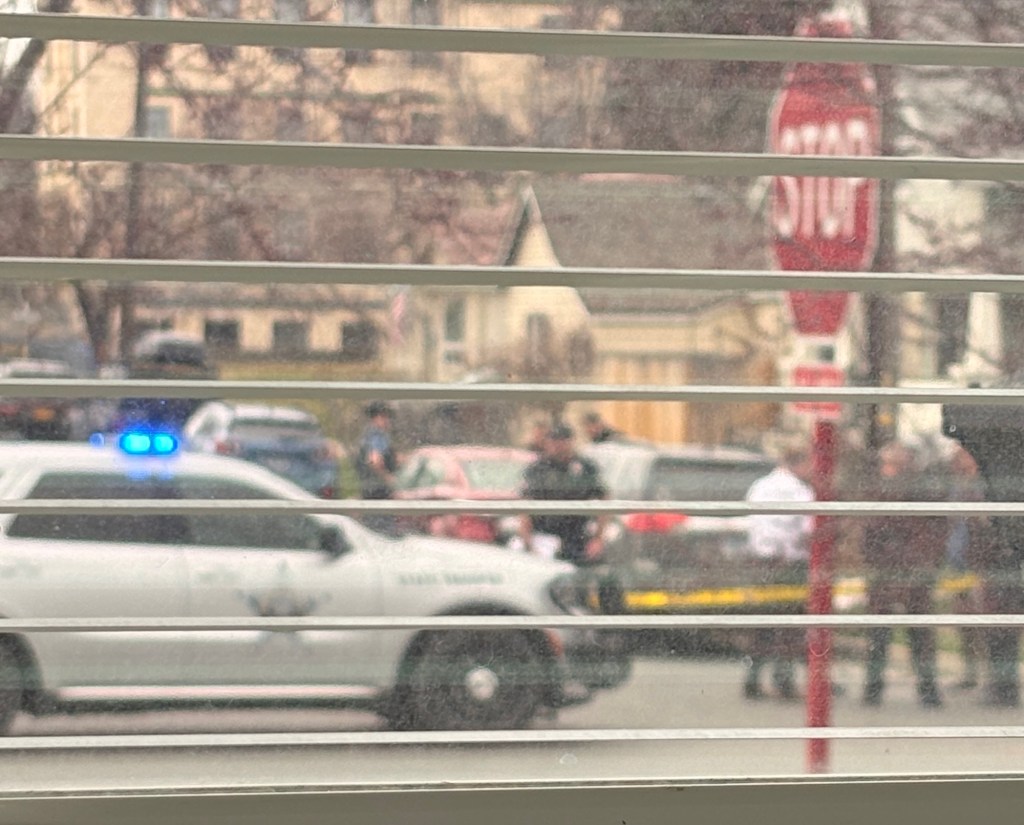
Yesterday morning, Larry and I watched a man die.
We didn’t plan for that. We woke the way most of us do, moving through the quiet early rhythms of a day we assumed would unfold like any other. Instead, we stood at our window and watched medics perform CPR on a man lying on the ground. We watched for a long time. And then a sheet was placed over him.
In the hour that followed, the world came to that spot. Medics, police, sheriffs. And then family. Each of them arriving into a reality they also hadn’t planned for. Their faces, their movements, their voices all carried the particular shock of a life interrupted without warning.
For one person, existence ended. For everyone who loved him, the before-and-after line of their life was drawn right there on that ground.
Most of us move through our days believing they will continue. That belief isn’t wrong, exactly, but it shapes us in ways we rarely examine. We allow ourselves to be pulled into the ongoing narrative of our lives, the bills, the difficult relationships, the unresolved tensions, the noise of a world that never quiets. We treat these things as the substance of life. We measure ease and difficulty against them. We plan around them. We suffer over them.
What happened outside our window was a reminder that this narrative, as consuming as it is, exists inside something much larger and more final.
The man who got into his car yesterday morning likely thought it was just another day. He may have been running late. He may have been thinking about something that felt urgent. He had no way of knowing that this ordinary morning was his last.
None of us do.
Impermanence isn’t a philosophy. It’s the condition we live inside, whether we acknowledge it or not. The control we think we have, or wish we had, is something we construct to make the uncertainty bearable. That construction isn’t without value. But it’s also not the ground we think it is.
So if the ground is not certain, what are we actually standing on?
I think, if we sit with that question honestly, the answer most of us arrive at is the same one we started with. Long before we learned to want status or security or to be right, we wanted something simpler. We wanted to be loved. We wanted to love. That was the whole of it, once.
What would it mean to return to that?
Not as sentiment, and not as a retreat from the real difficulties of being human. But as a genuine reorientation. If love, in whatever form we are capable of, is our deepest aim, then many of the things we treat as most urgent begin to look different. The argument that had to be won. The grievance that had to be acknowledged. The fear that had to be managed before we could open toward anyone.
Metta is a Pali word often translated as loving-kindness. Its literal meaning is closer to goodwill, a wish for the wellbeing of all living things, including oneself. It isn’t a feeling you wait to have. It’s a direction you choose to face.
Yesterday reminded me that we don’t know which morning is the last one. For us, or for anyone we will pass on the street today.
If we knew, I think we would be kinder. I think we would let more things go. I think we would reach toward the people in our lives with less hesitation.
We don’t have to wait to know. We can choose to live as if it matters now, because it does. It always has.
That is what love asks of us. Not grand gestures, but the steady practice of remembering what we are here for, and turning toward it, one ordinary morning at a time.
Jan💕

Leave a comment