
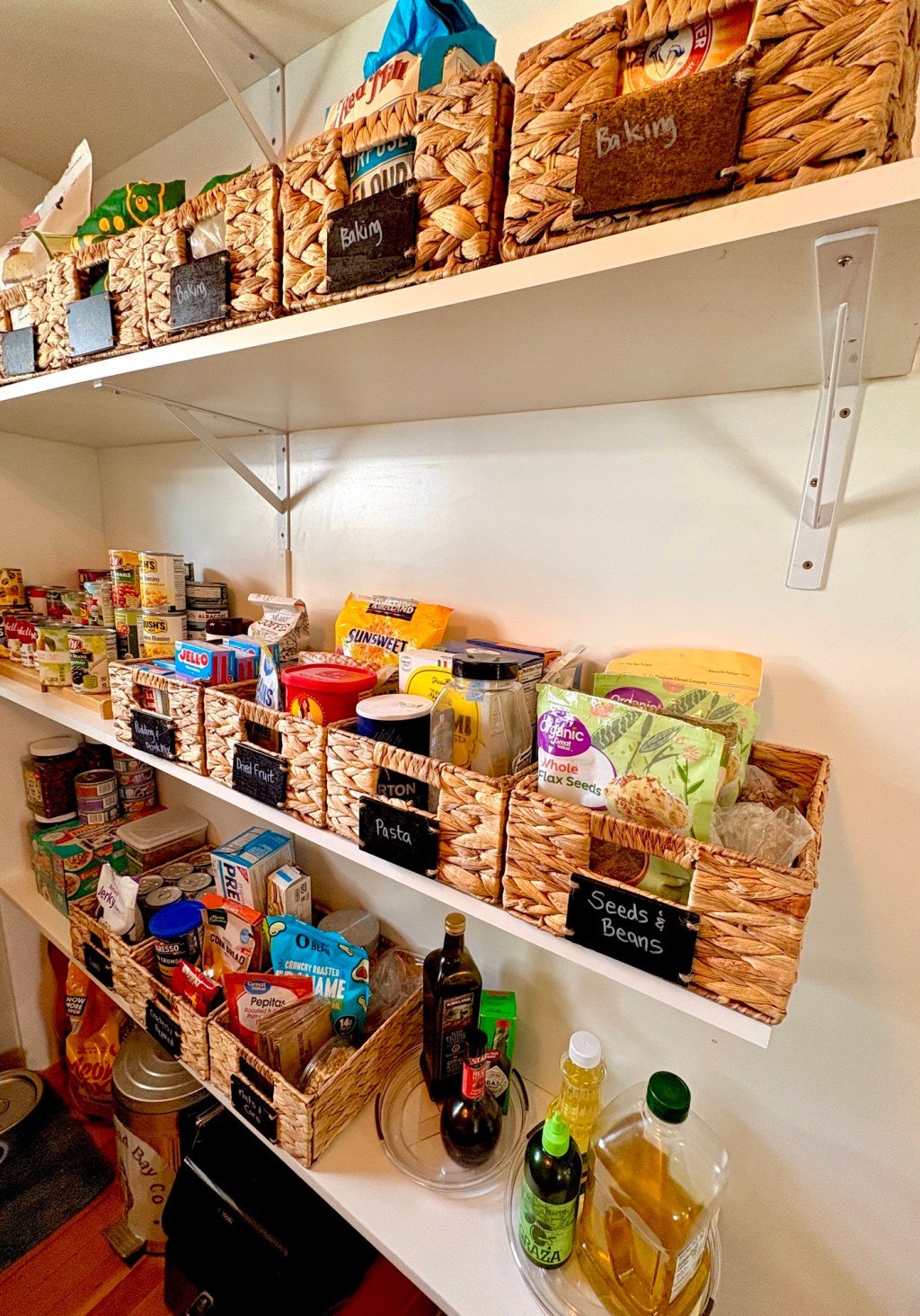
Since receiving my autism diagnosis, so much about how I move through the world has started to make sense. The hyperfocus. The pattern recognition. The deep need for things to have order and a place to belong.
One of the genuine gifts that comes with how my mind works is a drive toward order that feels almost instinctive. Everything has a category. Every category has a place. A well-organized pantry isn’t just practical to me, it’s settling. It quiets something. Systems bring me clarity in a way that words sometimes can’t.
What I’m still learning, and probably always will be learning, is how to extend genuine grace to people who move through the world differently. Not everyone needs a labeled basket. Not everyone thinks in categories. That’s not chaos, it’s just a different kind of order, one I don’t always recognize right away.
Order as Comfort, Not Control
Before diving into the how, it’s worth pausing at the why. Not all organizing comes from the same place, and understanding your own driver changes everything about the experience.
Ask yourself honestly:
When I organize, do I feel drawn toward something, or am I trying to escape something?
Does finishing the task bring satisfaction, or just temporary relief before the next worry surfaces?
Can I leave an unfinished organizational project and return to it later without significant distress?
Is the system serving my life, or am I serving the system?
These aren’t small questions. There’s a meaningful difference between the autistic drive toward order, which is neurological and appetitive, moving toward comfort and clarity, and OCD-driven organizing, which is anxiety-based, moving away from feared outcomes or intrusive thoughts. Same pantry. Completely different internal experience getting there.
If your organizing brings you home to yourself, that’s a gift. If it’s a treadmill you can’t step off, that’s worth exploring with someone you trust.
Organizing as a Mindfulness Practice
For me, the process started with finding the right baskets. That detail mattered. The texture, the uniformity, the way they looked on the shelf. Taking time with that choice wasn’t indulgence, it was presence. It was the practice.
Mindful organizing isn’t about speed or efficiency. It’s about bringing your full attention to the task and letting the process itself be the point.
Start with one surface or one category. Resist the pull to do everything at once. Presence lives in the particular, not the overwhelming.
Handle things slowly. Notice what you’re holding. Does it belong? Does it still serve you? Let the answers come without rushing them.
Choose your containers with care. The vessel matters. Something that pleases you visually or texturally will make you want to maintain the system. This isn’t superficial, it’s sustainable.
Group by your own logic. Someone else’s categories don’t have to be yours. I grouped by how I cook and what I reach for together. That internal coherence is what makes a system feel like yours rather than a chore imposed on you.
When the task is complete, pause. Stand in the space. Let the order register. That moment of quiet satisfaction is worth receiving fully.
The Practice Beyond the Pantry
The practice isn’t in perfecting my own systems. It’s in softening my grip on the idea that mine is the only way.
Everything has its place. Including people who don’t organize like I do.
That’s the harder practice, and the more important one.
Jan💕

Leave a comment