Whether something waits for us on the other side of this life is one of the oldest and most personal questions a human being can carry. This is not an attempt to answer it. People of deep faith and people of none have both looked honestly at existence and come to different conclusions, and that argument is not settled here. What this is about is simpler and more immediate: how do you live with presence and without dread while you are standing in the life you have right now?
Shakespeare gave us one of the most quoted lines in the English language, and we have been treating it as a problem ever since. “To be, or not to be, that is the question.” It lands like a crisis. A fork in the road. As if being and not-being are enemies, and we must choose a side.
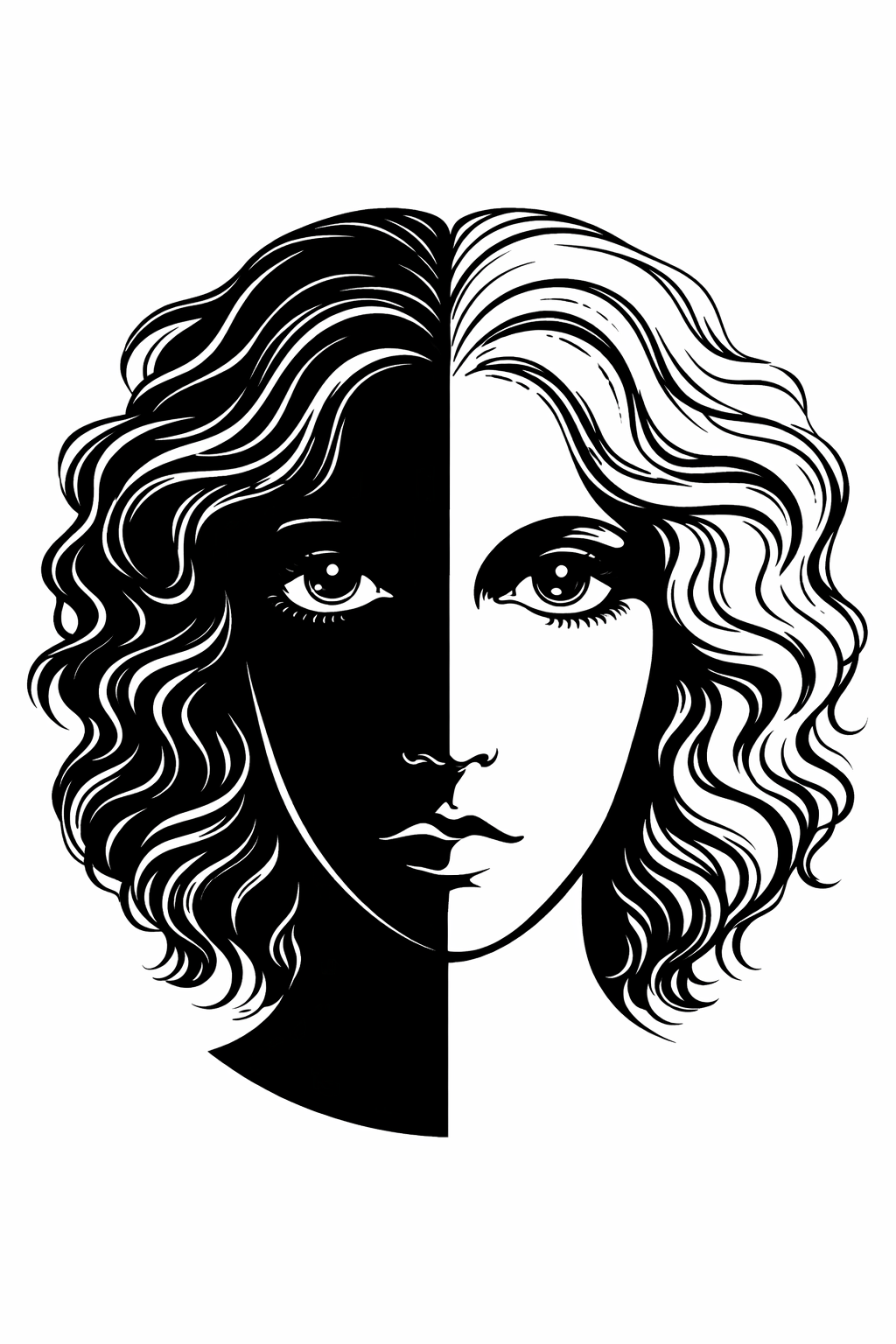
But what if they are not enemies at all? What if they are more like breathing in and breathing out?
Alan Watts spent a good part of his life pointing at this. He noticed that we live in a universe built entirely on contrast. Not as a design flaw, but as the very engine of existence. Light only registers because of darkness. Sound only travels because of silence. A wave has a crest because it also has a trough. You cannot have one without the other. They are not opposites fighting for dominance. They are partners in the same dance.
He put it plainly: you do not find the crest without the trough. The pulse of the universe is on and off, on and off, all the way down.
Physics agrees. At the quantum level, particles flicker in and out of existence. Matter itself is mostly empty space, more absence than presence. The solid table you press your hand against is, at its core, a very convincing arrangement of mostly nothing. Scientists call this the quantum vacuum, a restless sea of potential where things come into being and return to stillness in the same breath.
Even the universe itself is thought to have come from a kind of nothing. Whether it was created or unfolded, it is moving, eventually, toward a kind of nothing again. This is not a tragedy the cosmos is trying to avoid. It appears to be what the cosmos does.
So why do we find it so hard to extend this understanding to ourselves?
We watch the seasons arrive and let go without calling autumn a failure. We watch the tide pull back from shore without calling it loss. We are remarkably at peace with these rhythms out there. But when we turn the same lens inward, when we consider illness, or aging, or death, something in us tightens. We stop seeing rhythm and start seeing threat.
Here is a question worth sitting with: what if you are not an exception to nature? What if you are nature, doing exactly what nature does?
Across many traditions and many centuries, the wisest voices seem to agree on this much: impermanence is not a flaw in the design. It is the texture of life as we experience it here. The Japanese have a word, mono no aware, sometimes translated as the pathos of things. It describes the bittersweetness of knowing a cherry blossom is beautiful partly because it falls. Its brevity is not its tragedy. Its brevity is part of what moves us.
What lies beyond that falling, different traditions answer differently. Some speak of return, some of reunion, some of continuation in forms we cannot yet imagine. This essay does not try to settle that question. It simply notices that nearly every tradition, in its own language, resists the idea that the self is merely extinguished. Even the most materialist physicist will tell you that energy does not disappear. It transforms.
Watts would say that the fear of death is the flip side of the love of life, and that you cannot honestly have one without the other. To love being here is to implicitly know that you will someday not be here in this form. These two things do not cancel each other out. They define each other. Like the banks of a river that give the water its direction and its name.
This is not asking you to pretend illness is pleasant or loss is easy. It is not asking you to feel nothing. It is asking something deeper: can you hold the fullness of the picture? Can you see that the dark note belongs in the music, not because suffering is good, but because a song with only one note is not really a song?
The mystics and the physicists, approaching from opposite directions, seem to keep arriving at the same place. Existence pulses. It breathes. It comes and goes. And in that going, something is not simply erased. It changes form. It makes room. What it becomes may be more than any of us can name from where we stand.
Shakespeare’s Hamlet was in pain when he asked his question. Understandably so. But maybe the question itself was the problem. Maybe being and not-being were never asking to be separated. Maybe the answer was always in the rhythm between them, and in whatever that rhythm is moving toward.
You are here. That is astonishing. And someday you will cross a threshold none of us can see past clearly. That, too, is part of the same astonishing fact.
Jan💕

Leave a comment