
A Sixty-Year-Old’s Season of Learning
For most of my life, autism was something I thought I understood in a general way. It was a diagnosis associated with children, schools, and specialists. It wasn’t something I connected to my own story.
That changed gradually, through watching my grandchildren.
I have thirteen grandchildren. Every one of them is different. Different temperaments, interests, sensitivities, and ways of engaging the world. That matters, because nothing about neurodivergence shows up the same way in every person. There is no single presentation, no checklist that fits everyone.
Over time, I began noticing patterns in some of them that didn’t line up with what I had assumed were typical responses. Intense fear reactions to things others barely registered, like faces in paintings. Deep, sustained focus on particular interests. Direct speech, sometimes blunt, with little concern for social cushioning. Repetitive movements that appeared calming rather than disruptive. Emotional responses that didn’t always match the situation I thought warranted them.
At first, I interpreted these differences the way many of us do. Personality. Sensitivity. Anxiety. Phase.
In my own case, I had long explained my differences through the lens of a traumatic childhood. That explanation seemed sufficient, even responsible. Trauma does shape behavior. It shapes perception. It shapes coping.
But watching children grow up in different households, with different parents and different circumstances, made me pause. The similarities I was seeing weren’t random. They were consistent, even when the children themselves were not.
That’s when I began to reconsider what spectrum actually means.
What “spectrum” means in real life
Autism is often misunderstood as a straight line, from mild to severe. That model doesn’t reflect reality.
A spectrum doesn’t describe how much autism someone has. It describes variation across traits. People express different traits, in different combinations, at different intensities, depending on context and age.
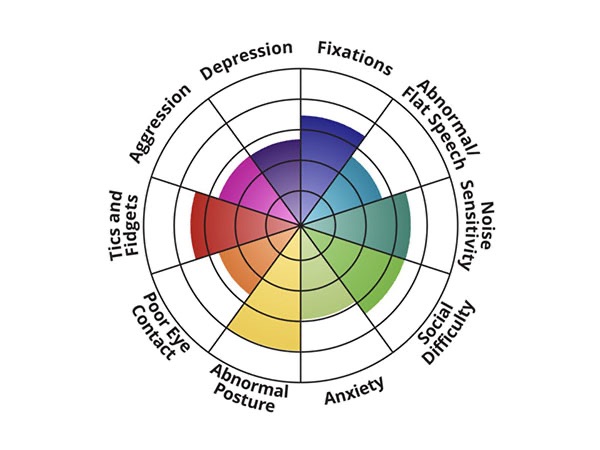
One person may be highly sensitive to sound but socially comfortable. Another may struggle with emotional expression but have strong verbal skills. One child may stim visibly, another hardly at all. One may need structure, another resist it. Traits can be subtle, situational, or masked entirely.
This is why two autistic people can look nothing alike, and why autism is so often missed.
Why autism is frequently missed in women
Current estimates suggest autism affects roughly 1 in 36 people, yet diagnosis rates still skew heavily male. For years, the ratio was cited as four boys to every one girl. More recent research suggests the true ratio is likely closer to three to one, and possibly even narrower.
More telling is this: studies estimate that up to 80 percent of autistic girls are either undiagnosed or misdiagnosed by age eighteen. Many women are first diagnosed in adulthood, often after years of being treated for anxiety, depression, or other conditions that never fully explained their experience.
There are reasons for this. Girls are more likely to:
• mask social differences
• internalize distress rather than act it out
• develop coping strategies that appear socially appropriate
• be described as sensitive, gifted, anxious, or difficult rather than neurodivergent
In my case, another factor played a role. As a child, I was identified as intellectually gifted. Strong verbal ability and high cognitive performance made it easier to mask. I learned early how to observe, adapt, and compensate. Over time, that masking became so effective that even I believed what it suggested about me.
That I was fine.
That I was simply intense.
That I just needed to try harder.
Turning the lens inward
Eventually, the noticing turned inward.
Many of the traits I had spent decades managing showed up clearly once I knew what to look for. Sensitivity to sound. Emotional overwhelm that arrived quickly and took time to resolve. Periods of intense focus. Echolalia. Direct communication that could be misread as insensitivity. A constant effort to translate my internal experience into something socially acceptable.
I was diagnosed at sixty years old.
The diagnosis didn’t change who I was. What it changed was how I understood myself.
It allowed me to reframe much of my childhood, not as personal failure or damage alone, but as a nervous system navigating the world with limited support and understanding. Trauma and neurodivergence were not competing explanations. They were layered.
Why identifying it matters
For me, identifying autism wasn’t about labels. It was about context.
It allowed me to stop treating certain traits as flaws and begin seeing them as part of how I’m wired. Quirks I had spent years correcting or hiding began to look like meaningful aspects of my character.
Having the support of loved ones, especially my husband Larry, has made a significant difference. With his help, I can step back from a situation and ask more constructive questions.
Is this a typical response?
Or is my lens coloring the moment in a way that might have unintended consequences?
Sometimes that reflection happens after the fact. That’s okay. What matters is the willingness to look, recalibrate, and communicate more clearly next time.
This awareness has changed how I relate to others. It’s allowed me to live with more honesty and less self-correction. More mindfulness, less shame.
A different way of noticing
If you’ve struggled with someone in your life, especially in ways that repeat over time, it may help to pause and look again. Not to label, not to diagnose, but to consider whether a different lens might offer more understanding and compassion.
You might ask yourself:
Is this person often seen as combative or argumentative?
What can look like argument may be a need for clarity, precision, or fairness. Some neurodivergent people process ideas by questioning them out loud. This isn’t always about opposing others. It can be about making sense of the world through language.
Does this person seem cold or unmoved in emotional situations?
Emotional expression doesn’t look the same for everyone. Some people feel deeply but process internally. Others may not mirror expected reactions in the moment, even though they care deeply.
Does this person fixate on topics or hobbies?
What looks like fixation can be a source of regulation, joy, or meaning. Deep focus is often how neurodivergent minds engage with the world.
Does this person change their mind, career, or housing situation often?
This can reflect a nervous system that responds strongly to environment. When something no longer works, the need to move on can feel urgent. What looks like instability may be an attempt to find alignment or relief.
Does this person avoid eye contact or have unusual physical mannerisms?
Eye contact can be uncomfortable or distracting rather than connecting. Physical movements, often called stimming, can help regulate stress, focus, or emotion.
None of these traits automatically mean someone is neurodivergent. They may point to autism, ADHD, trauma, anxiety, personality, or something else entirely. But noticing patterns rather than judging moments can make behavior feel less personal and open the door to greater understanding.
Closing
Autism didn’t suddenly appear in my life at sixty. What appeared was understanding.
That understanding has changed how I see my past, how I live my present, and how I show up for the people I love.
If this topic resonates with you, I’d welcome hearing from you in the comments. I’m considering a follow-up piece written from the perspective of partners, family members, and loved ones who are learning how to live alongside someone on the spectrum with greater understanding and care.
If that would be helpful to you, let me know.
Jan🌈

Leave a comment