Dopamine is often blamed for what feels fractured in modern life. Restlessness. Short attention spans. The sense that we cannot stop reaching for the next thing. But dopamine itself is not the problem.
It is ancient. Early humans depended on it. Dopamine is the chemistry of anticipation, the inner push that kept us searching for food, exploring new territory, and staying alert to possibility. Without it, curiosity fades and movement stops.
The difficulty is not dopamine. It is living in a world designed to keep it constantly engaged.
Dopamine does not create pleasure. It creates wanting. It pulls attention forward, toward what might happen next, rather than what is happening now. You can feel it in the urge to check one more time, in the sense that satisfaction is just ahead, in the restlessness that arrives before the screen even lights up.
We learn this pattern early. The holidays make it obvious. We stretch anticipation on purpose, counting days, hiding gifts, building suspense. Excitement lives in the waiting. There is warmth in that. But there is also a lesson absorbed quietly: happiness is something that comes later.
When the moment passes, the nervous system looks for the next rise.
Social media refines this loop. I’m just checking my messages turns into minutes, then hours. The next post might be better. The next article might land. For creators, the hope shifts to visibility. Maybe this one will take off.
Intermittent reward is powerful. Sometimes there is a hit. Often there is not. The uncertainty keeps us leaning forward.
Over time, this state is exhausting. Attention fragments. The body stays slightly activated. Contentment is postponed.
This is not a failure of willpower. It is biology being overused. A life driven by constant dopamine swings is not sustainable, and it is not loving.
Nothing stays the same. Excitement fades. Disappointment shifts. Even restlessness changes when it is allowed to move. Impermanence is not meant to dull experience. It reminds us that no state, pleasant or unpleasant, can be held.
This is where equanimity belongs.
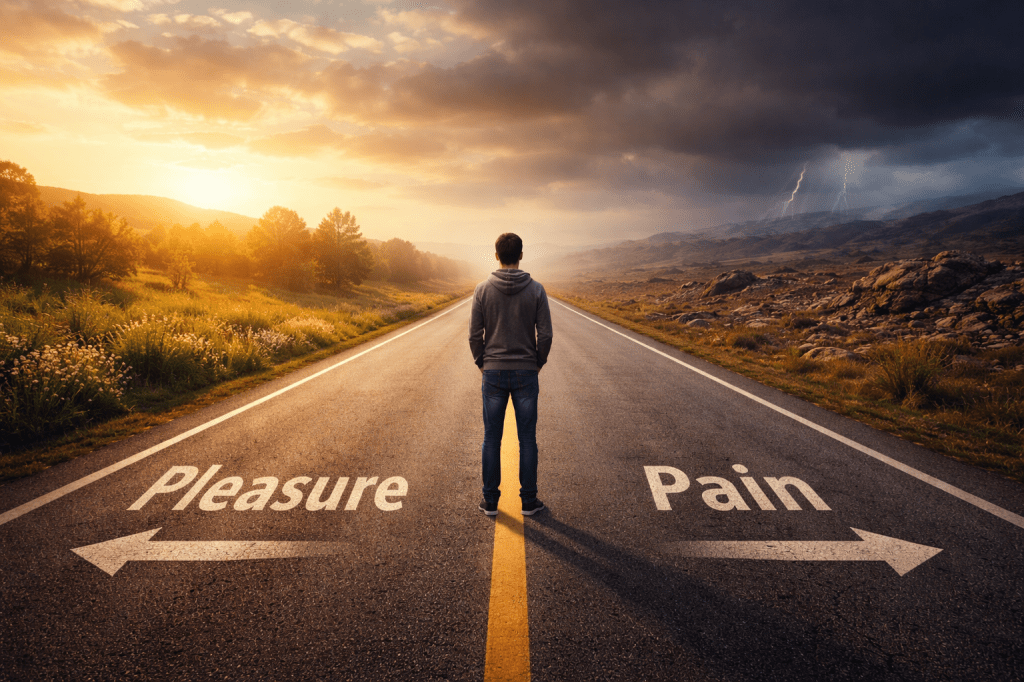
Equanimity does not mean detachment. It does not mean avoiding pleasure or bracing against pain. It means knowing where you are while you are there. Pleasure is allowed. Pain is allowed. What loosens is the grip.
The Middle Way is not a narrowing of life. It is a widening of awareness. We feel the rise of excitement without chasing it. We meet disappointment without turning away. Nothing is rejected. Nothing is clung to.
When dopamine surges, equanimity lets us recognize it as movement rather than command. The body can feel anticipation. The mind does not have to obey it.
In my recent book Winds of Change, a small group of woodland characters learn this lesson through experience. They discover that peace does not come from avoiding desire or enforcing harmony, but from learning how to live in the middle of the middle, where change is expected and balance is practiced.
The story is fictional. The teaching is not.
The Middle Way does not promise constant happiness. It offers something steadier: the ability to remain present as life rises and falls, without being carried away by either.
See you in the middle,
Jan

Leave a comment