
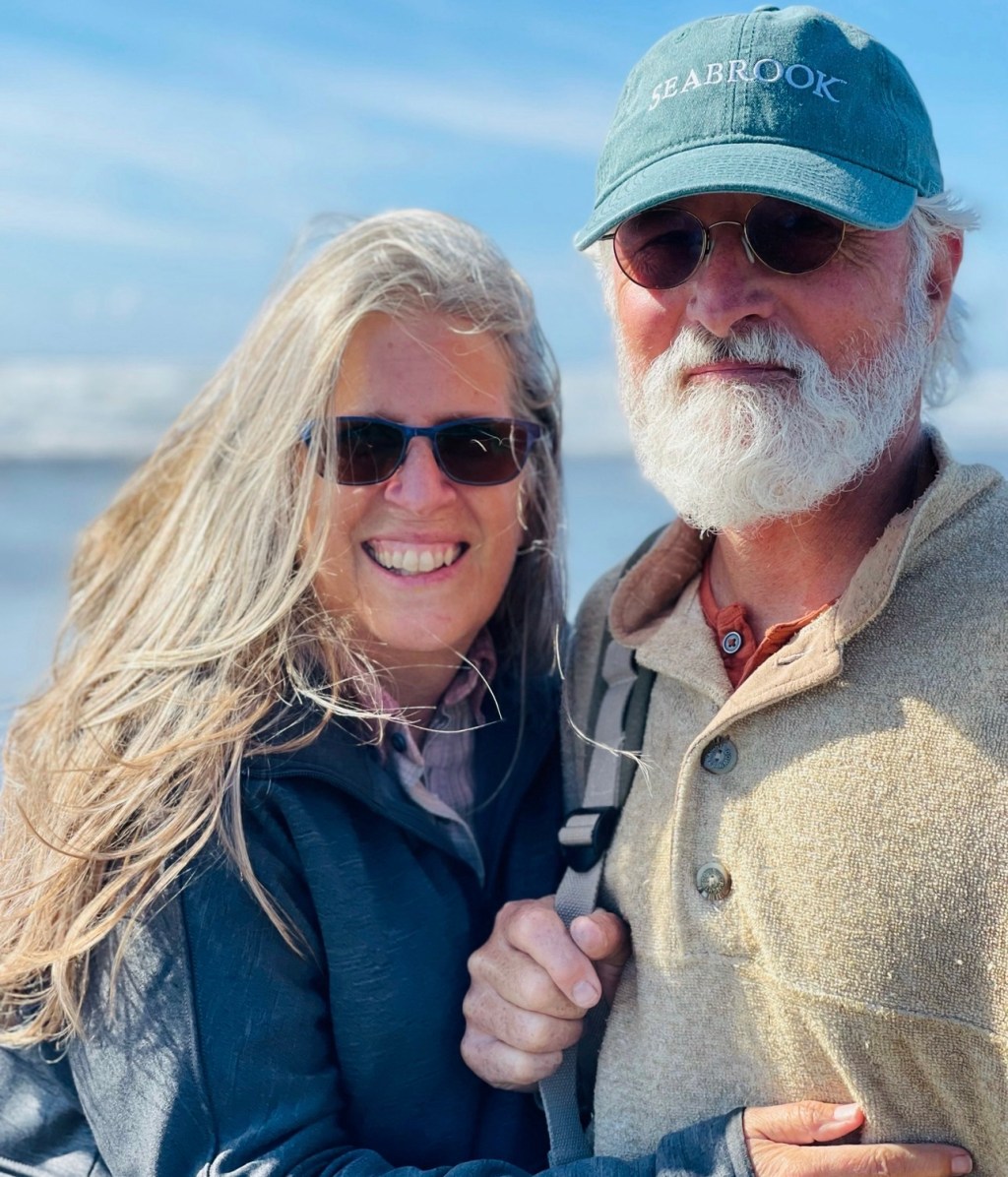
Recently, my husband Larry and I stepped into a welcome opportunity to pause. With his retirement rapidly approaching, we have been given something many people never consider, a clear moment in time to ask how we actually want to live.
Not someday in the future. Now.
The question is not just how we will spend our time, but how we will meet it.
Will we carry forward the habits that keep us rushed, preoccupied, and reactive? Or will we choose a life more closely aligned with the values we say matter to us, mindfulness, compassion, and care, for ourselves and for those around us?
This question has sharpened my attention.
Life Is Only Happening in Six Places
In our morning teaching time, we were reminded of a simple Buddhist philosophical teaching. At any given moment, experience is only entering through six sense doors: seeing, hearing, smelling, tasting, touching, and thinking.
That is all.
No matter how complicated life feels, nothing is happening outside those six doors. Stress arises when we forget this and try to manage everything at once. Attention scatters. The mind races ahead or loops backward. Life feels noisier than it actually is.
But when we slow down and notice which of these sense doors is active, the experience simplifies.
There is a sound.
There is a sensation in the body.
There is a thought about the future.
Each can be met without reactivity.
Untangling from Habit
This understanding has been especially relevant as Larry and I look at the habits we have carried for years. Some are obvious. Overworking. Staying busy as a default. Filling open moments with television or phone scrolling. Consuming the world’s problems late into the evening and calling it staying informed.
These habits are often described as choices, but more accurately, they are patterns of attention. They pull us through the sense doors again and again, reinforcing stress and restlessness.
Seeing the phone light up.
Hearing the news cycle repeat.
Feeling the urge to check, respond, achieve.
The suffering is not in the devices or the schedules. It is in how unconsciously we meet them.
Choosing a Different Pace
Retirement is not just an ending. It is an invitation to live at a pace that honors our true pace, and the pace of nature itself.
This does not require renouncing the entire modern world. It requires discernment.
Which sense doors are we feeding?
Which ones are constantly overstimulated?
What happens when we let one door rest?
When attention becomes more intentional, life begins to feel less hectic. The noise softens. Choices align more closely with values. Compassion has room to arise, not as an ideal, but as a natural response.
Renunciation as a Skillful Act
It matters to say this clearly. Paying attention does not mean withdrawing from life.
As habits come into clearer view, we may notice that some have crossed from preference into compulsion. Stress, achievement, television, constant scrolling. In those moments, awareness alone may not be enough.
Sometimes, renunciation is a skillful act.
In my own life, this has meant honestly acknowledging how television and phone use fragment my attention. Choosing to remove the television or move to a phone that is less of an attractive nuisance is not a rejection of the world. It is a way of meeting it more cleanly.
Renunciation, practiced wisely, is not about deprivation. It is about creating conditions that support clarity, care, and a life lived at a human pace.
A Kinder Way of Being
Turning down the noise does not mean stepping away from life. It means entering it more fully, one moment at a time, through the doors that are already open.
As we stand at this transition, I am learning that a meaningful life is not built by adding more, but by noticing more clearly what is already here.
Six doors.
This moment.
Enough.

Leave a comment